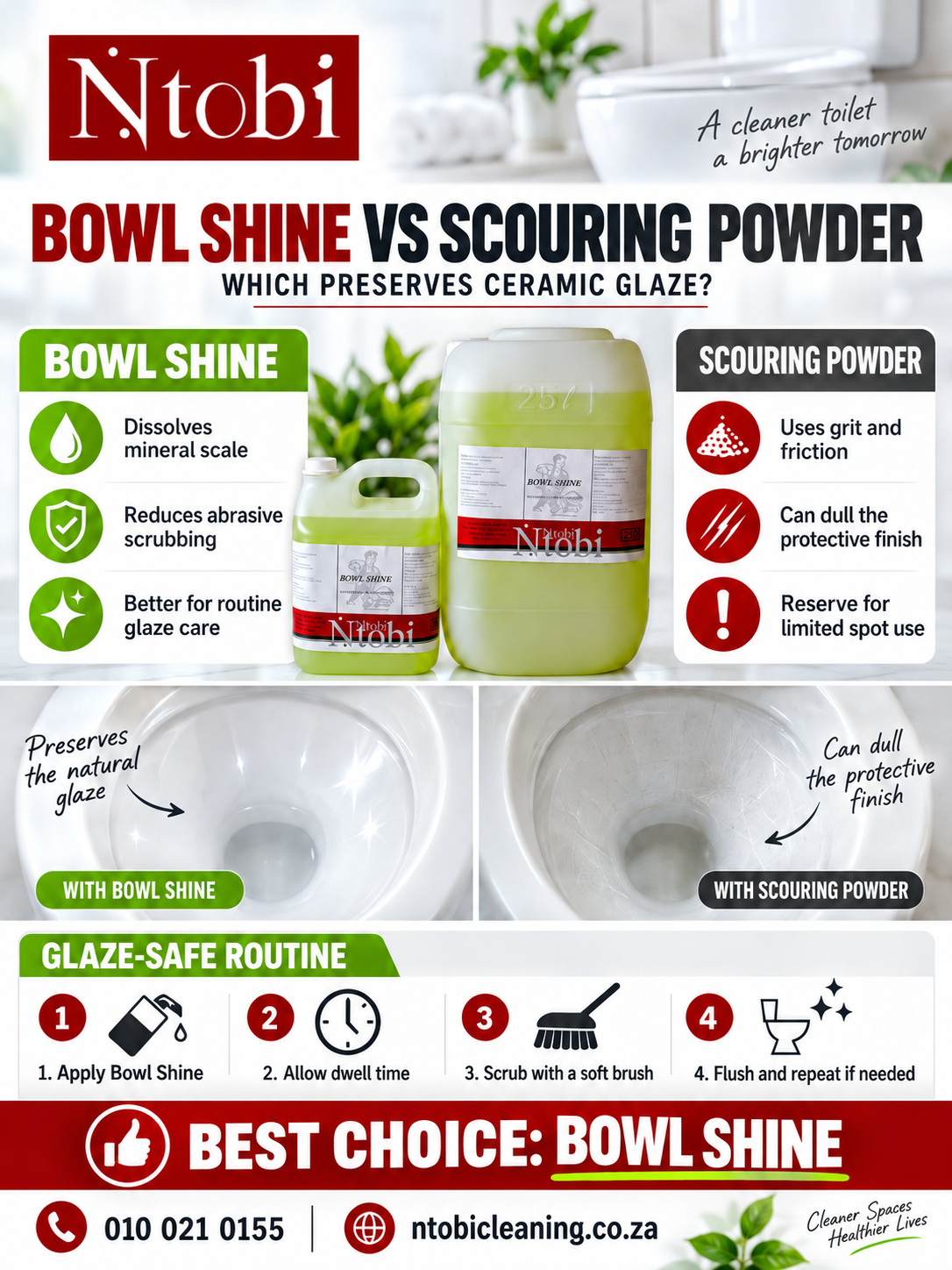
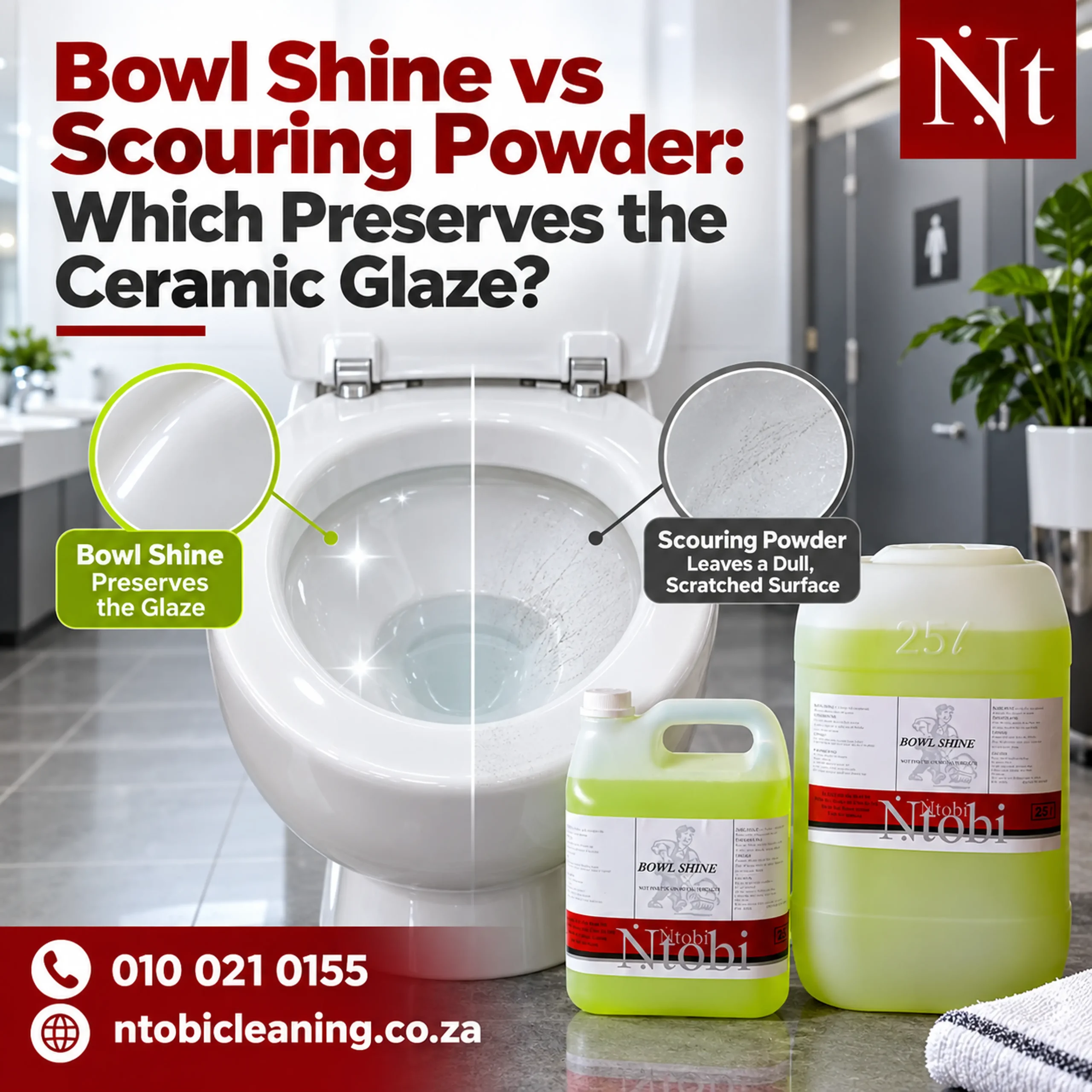
Bowl Shine normally preserves a glazed ceramic toilet surface better than scouring powder when staff use it according to the label. Scouring powder cleans through grit and friction, while an acidic bowl cleaner dissolves mineral scale. That difference matters because repeated abrasion can leave a once-glossy glaze dull and harder to keep clean.
Protect Ceramic Glaze With Ntobi Bowl Shine
Choose a scale-removing toilet bowl cleaner for schools, offices, hospitality venues and commercial washrooms across Gauteng.
Key Takeaways: Bowl Shine vs Scouring Powder
| Best choice for routine glaze care | Bowl Shine, when used according to its label, usually protects the finish better than abrasive powder. |
|---|---|
| Why powder can dull glaze | Its particles clean through friction and can create fine wear over repeated cleaning cycles. |
| How Bowl Shine works | Its acidic formula targets mineral scale and stains through chemical action. |
| Safer cleaning tool | Use a soft toilet brush or non-metal pad instead of a harsh scourer. |
| Critical safety rule | Never mix an acidic toilet cleaner with bleach or other chemicals. |
Bowl Shine vs Scouring Powder: Which Preserves the Ceramic Glaze? The short answer is Bowl Shine for routine scale removal, provided cleaners follow the product label, allow the stated contact time and avoid harsh tools.

Bowl Shine vs Scouring Powder: Which Preserves the Ceramic Glaze?
A sanitaryware glaze forms a hard, glass-like finish over ceramic. Its smooth surface limits soil adhesion, while repeated aggressive scrubbing can gradually reduce that smoothness.
Bowl Shine vs Scouring Powder: Which Preserves the Ceramic Glaze? Scouring powder relies on particles and pressure. Bowl Shine targets limescale and mineral deposits through chemical action, which reduces friction.
Ntobi Cleaning Supplies recommends matching the product to the deposit before staff reach for an abrasive tool, especially where teams clean fixtures daily.
Bowl Shine vs Scouring Powder: Which Preserves the Ceramic Glaze? Cleaning Action
Bowl Shine vs Scouring Powder: Which Preserves the Ceramic Glaze? Bowl Shine reacts with mineral deposits instead of sanding them away. Correct dwell time lets a soft brush finish the job.
- Apply: cover the stained or scaled area.
- Wait: follow the labelled contact time.
- Brush: use a soft toilet brush.
- Flush: remove deposits and residue.
- Repeat: avoid forceful abrasion.
Staff must ventilate the area, follow the label and keep incompatible chemicals apart. Acidic bowl cleaner must never be mixed with chlorine bleach. The wider range of cleaning products contains chemicals with different purposes.
Bowl Shine vs Scouring Powder: Which Preserves the Ceramic Glaze? Abrasion Risk
Bowl Shine vs Scouring Powder: Which Preserves the Ceramic Glaze? Scouring powder combines grit with hand pressure. It may remove a ring while leaving fine scratches that make glaze look flat.
A dulled surface collects residue faster. Facilities should reserve powder for limited, manufacturer-approved spot work rather than daily toilet cleaning.
Bowl Shine vs Scouring Powder Comparison for Facility Teams
Bowl Shine vs Scouring Powder: Which Preserves the Ceramic Glaze? This comparison assumes correct use on sound glazed ceramic.
| Factor | Bowl Shine | Scouring Powder |
|---|---|---|
| Primary action | Dissolves mineral deposits | Abrades deposits with grit |
| Glaze preservation | Generally better for routine use | Higher risk of gradual dulling |
| Tool required | Soft toilet brush | Often paired with added hand pressure |
| Best use | Scale and stain removal as directed | Limited spot use only when approved |
| Main caution | Never mix with bleach | Avoid repeated abrasive cleaning |
Clear dosing and one approved brush reduce improvisation. Buyers can review the Ntobi cleaning products shop when planning stock.
Bowl Shine vs Scouring Powder: Which Preserves the Ceramic Glaze? Safe Routine
Bowl Shine vs Scouring Powder: Which Preserves the Ceramic Glaze? Staff should inspect the bowl, apply Bowl Shine to mineral deposits, wait for the labelled dwell time, brush softly and flush.
Teams across the East Rand can add this sequence to a washroom checklist and record recurring hard-water scale.
Related Ntobi guides cover toilet cleaning products for commercial washrooms, a cleaning products wholesaler in the East Rand, cleaning chemical suppliers in Johannesburg, heavy-duty degreaser for workshop surfaces and guidance on 5kg washing powder value.
Bottom Line: Bowl Shine Protects Glaze Better
Bowl Shine vs Scouring Powder: Which Preserves the Ceramic Glaze? Bowl Shine is the better routine choice because it loosens mineral build-up chemically. Staff must still follow the label and keep acid cleaner away from bleach.
Frequently Asked Questions
Bowl Shine vs Scouring Powder: Which Preserves the Ceramic Glaze?
Bowl Shine uses chemical action, while scouring powder uses friction that can dull the finish.
Can Bowl Shine be used every day?
Use the frequency and dose stated on the product label.
Does bleach remove limescale from a toilet bowl?
Bleach does not dissolve mineral scale like acidic cleaner. Never mix bleach with Bowl Shine.
Can a toilet brush scratch ceramic glaze?
A soft brush suits sound glaze. Avoid metal tools, harsh pads and heavy pressure.
What should staff do with a stubborn toilet ring?
Apply Bowl Shine, allow the labelled contact time, brush gently and repeat if required.
Is Bowl Shine suitable for every toilet material?
Check the product label and fixture manufacturer’s instructions. Materials other than glazed ceramic may need a different cleaning method.
Order Ntobi Bowl Shine
Ask about current stock, collection and delivery for commercial, institutional and household cleaning requirements.